Originally published for the Daily Orange
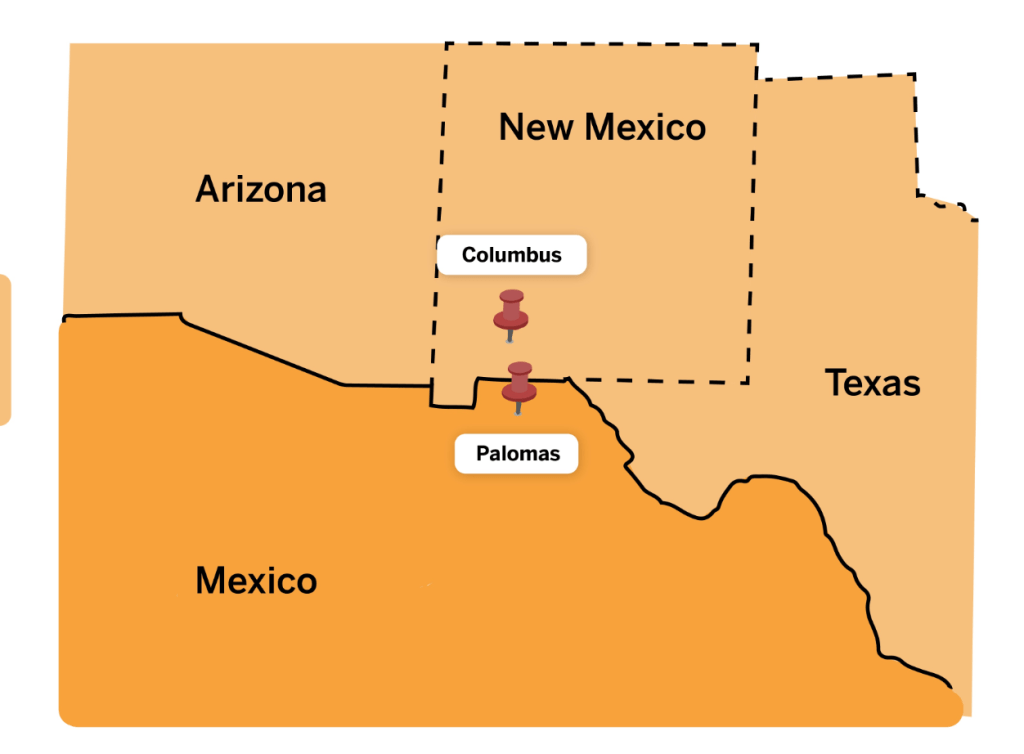
When the Battle of Columbus commenced in 1916 on the border town of Columbus, New Mexico, General Pancho Villa led a raid into the American town from Mexico. The documentary “Crossing Columbus” is set a little more than 100 years after the attack, in Columbus and the neighboring Mexican city of Palomas.
The raid still looms in the minds of the people of the two neighboring towns as the two sides view Villa quite differently. Palomas annually honors Villa by marching to the streets with bombastic drums, with numerous men on horseback nearby. But across the border in Columbus, many residents treat the history of Villa and the raid like a museum, with remnants of the raid used as a teaching ground to learn about the Battle of Columbus.
While many people in Mexico view Villa as a hero, many in Columbus see him as a terrorist. One interviewee from Columbus even compared him to Osama bin Laden. While both communities are forever linked because of the raid, their members have contradictory perspectives on the raid’s leader and significance. Cathy Lee Crane’s documentary about the two towns is very much about the idea of perspective and the effect one outcome can have on two sides of the same coin.
Crane goes in-depth into the surroundings and thoughts of the people on both sides of the border. Despite cultural differences between the two communities, we uncover that both communities share similar customs and values. Many on the American side, however, still use the events of the raid in 1916 as an excuse to not connect with the people of the bordering city of Palomas.

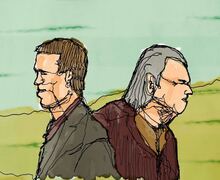
(‘Crossing Columbus’ presents the uneasy relationship of bordering citiesArt by Maya Goosmann)
This detachment is present for most of the film, as Crane uses different filmmaking techniques to depict the differences between each side of the border. Circle cams and ominous background music are most notably used when filming Palomas, while footage of Columbus relies on mostly handheld shots. It is near the end of the film — during the reenactment of the battle — when the audience sees the two communities become one. At the reenactment, we see that the two unions are very much alike, with many on both sides sporting flannel button-ups, straight-legged jeans with either baseball caps or cowboy hats sitting on the top of their heads.
Crane’s documentary reflects the division of the Trump era, as the film highlights the raised tension between two communities on opposite ends of the border. The concept of a stronger border was the backbone of former President Donald Trump’s initial campaign, and his message spread across to many who live by the border. In the film, we see an example of his message from a Columbus resident who questions the legitimacy of naturalized citizenship in response to many American-born Mexican children being bused over the border to Mexico to receive schooling in Spanish. Crane subtly illustrates her disdain for this unnecessary border, which is used as a centralizing theme in the film, symbolizing the disconnect many Americans have with Mexico.
Crane uses the horse rides from the two countries as a connector for the two countries to co-exist. But as the film commences, we see that the two different communities can come together and bond as one. Many residents within Columbus still feel discontent towards Villa, however, the two towns are forever linked and share the same world with one another.


 Rivo Writings
Leave a comment